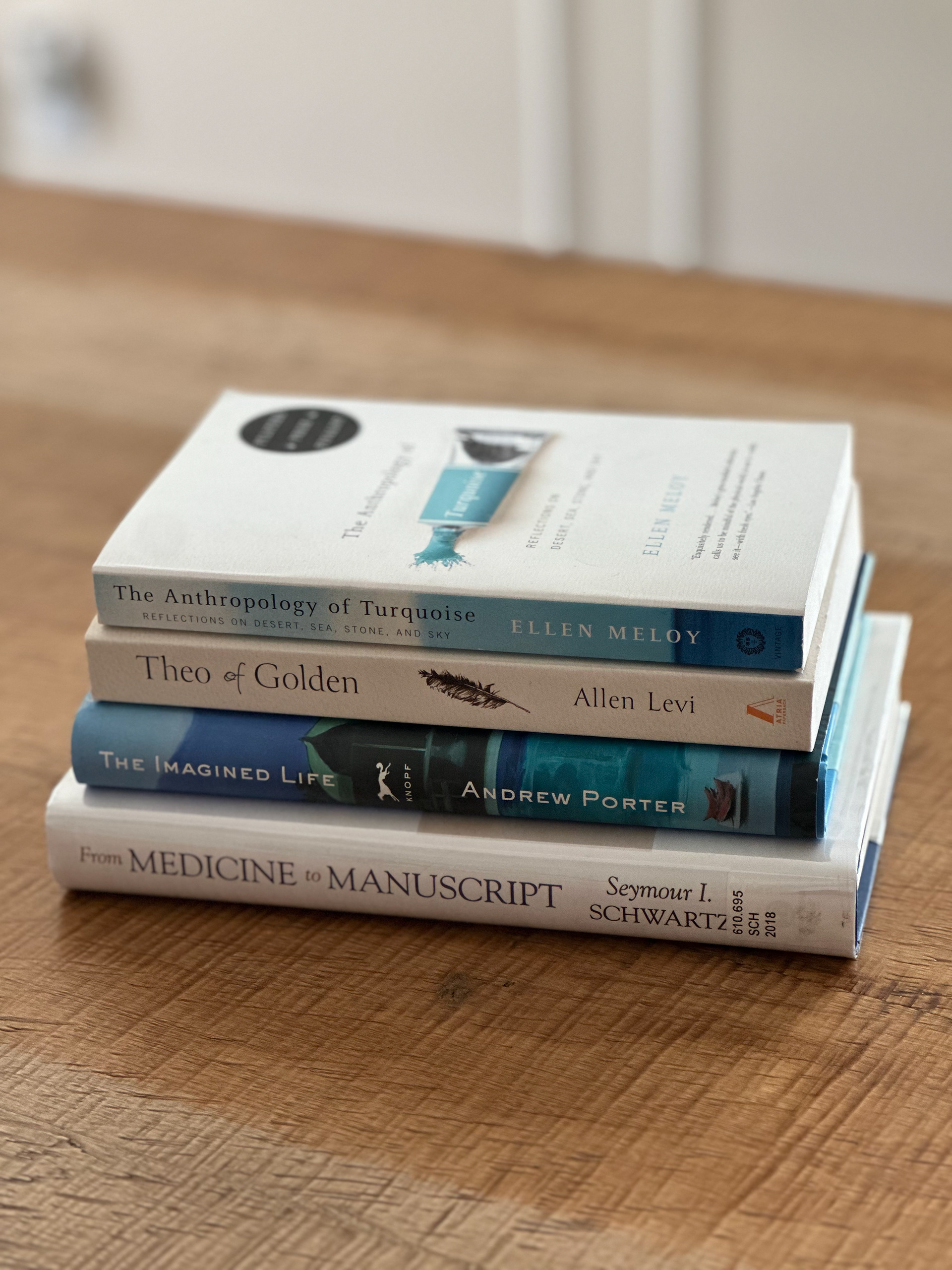
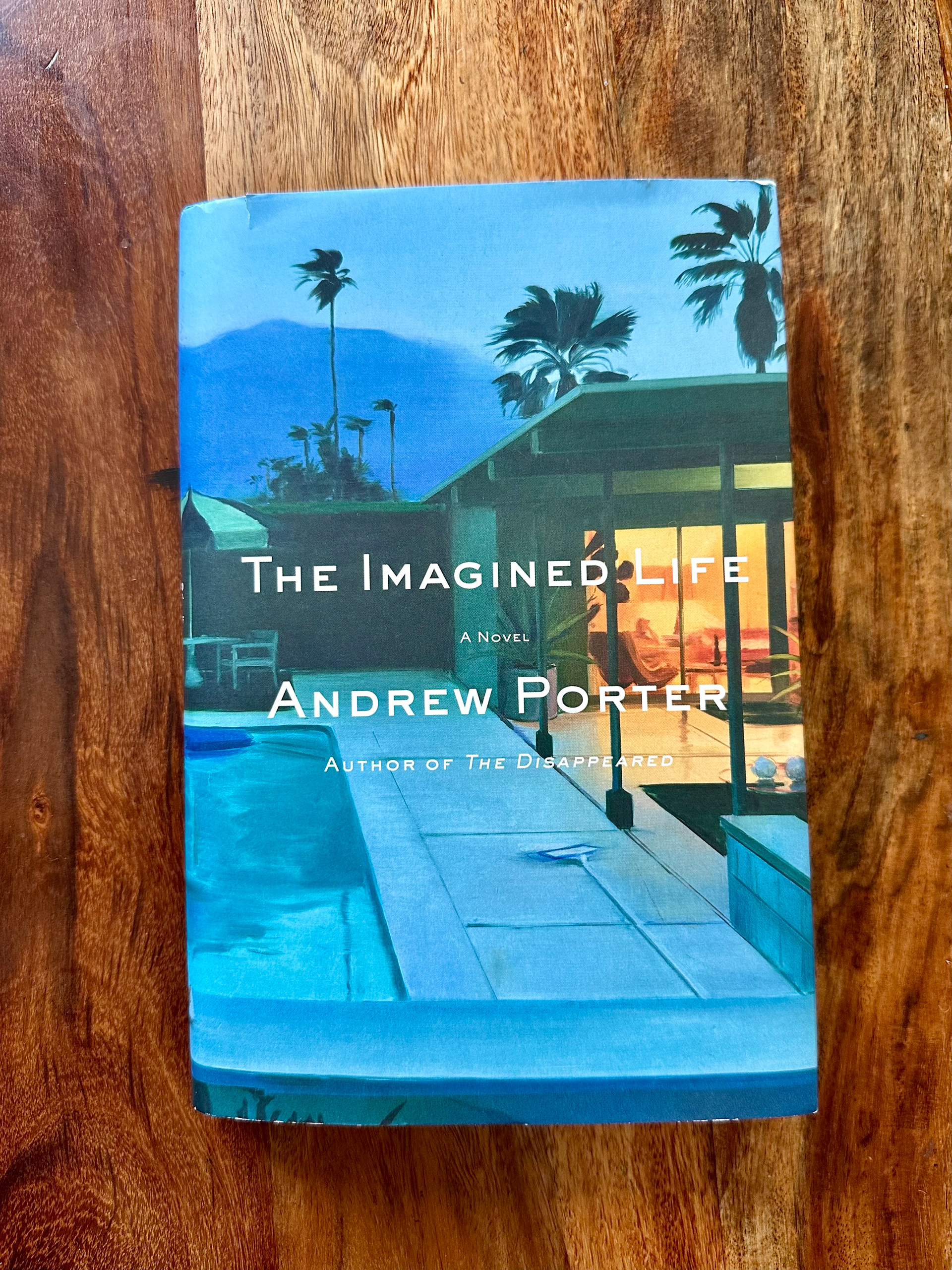
The Imagined Life by Andrew Porter
Goodreads Review
A dream of a novel. You can tell from the title 'The Imagined Life' juxtaposed with Edward Hopper style cover (which I love!) that the reading of Andrew Porter's writing is going to set you on a pensive and hazy narration of light-infused nostalgia. Set in California, of course, and in recent days I've coincidentally been (re)watching the epic TV series The OC with my teenage boys. The overlaps between references to places like Catalina Island, the Hollywood Hills, and Newport Beach have been perfect. Not yet having visited California, this has led me to enjoy an even greater layer of dreaminess in the novel.
Steven Mills is the story's voice who immediately tells us he's in search of something else. Dissatisfied and embarking on a project "for the truth of what happened to [my]father," the tone of the novel is sad... full of melancholy. He has distanced himself from his own life, from his wife Alison and son Finn. His determination to uncover why or what happened to destroy his father's life in academia, plus the cause of his father's abandonment of him and his own mother is what we follow alongside a physical journey up the coast of California. We learn that his father was "a brilliant, charismatic professor who disappeared on a wave of ignominy in 1984 when Steven was twelve." The way the answers to this unravel through Steven's gradual connection with the truth is weirdly very tranquil.
The atmosphere of Porter's novel is absorbing, languorous and sometimes desolate. There is a literary beauty to it. Steven's retrospection, reflecting on his childhood perspective of events makes the tone wistful, at odds with the narrator's anger towards his father. It reminds me of classic American novels like F Scott Fitzgerald's The Great Gatsby, but also unreliable narration such as that in Ford Madox Ford's The Good Soldier, and in some way even the narration from Daphne du Maurier's Rebecca. I think what I was able to note and what grabbed me as a reader is the close and sometimes uncomfortable interiority of the narrator Steven's true thoughts.
I love all the references to California in the 80s; the music, the climate, the food and drink, the party and family lifestyles we knew a little of but mainly saw in films of the time. They might be repetitive, but they work in bringing us back to the light. Andrew Porter's authorial choices are magnificent for this enigmatic and elusive setting.
There is a lot of sadness conveyed in relation to the narrator's retrospective childhood relationships with his father, mother and friends. The moments of grief and absolute despair felt by
Steven are felt by the reader too, probably because of how close we are encouraged to follow him in his journey to find himself. Yet finally, in the final Part 4, "in the imagined life, so much is different."
Steven are felt by the reader too, probably because of how close we are encouraged to follow him in his journey to find himself. Yet finally, in the final Part 4, "in the imagined life, so much is different."
Wow. What a read. And the final line and link back to earlier experience is beautiful (to say again).
review by Christina Francis-Gilbert
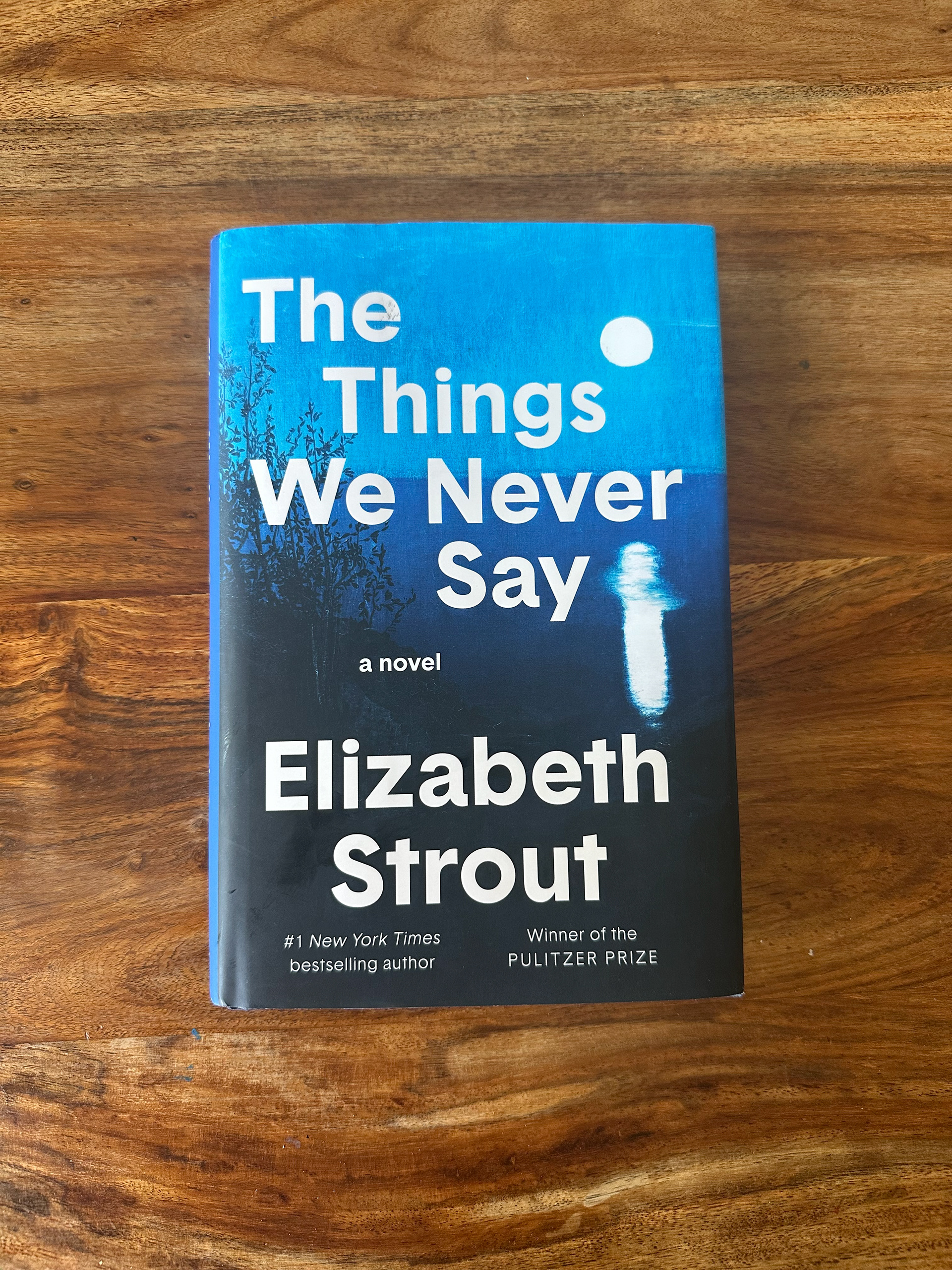
The Things We Never Say by Elizabeth Strout
A new community of characters with lives that fascinate. Elizabeth Strout has done it again, by tapping into some unrecognised vulnerable layer of ourselves. She gives us scenes that we know and interior thoughts that we understand, and spoken moments about which we sometimes cringe or regret. I've spoken often in my reviews of Strout's characters not really feeling like created unreal figures of literature, but instead as real wholesome people, and in this novel, we feel their moments of "loneliness, friendship, parenthood, and the importance of truth in a capsizing world."
Artie Dam is our central protagonist, who was familiar to me because of his profession as a secondary school (history) teacher of eleventh graders. The gap between the performances that teachers make on the classroom stage and how teachers live their private lives clicked with me, in particular the moment when Artie arrives at a neighbour's party and makes self-deprecating jokes, knowing he is always on show. This scene summed up for me the crippling sadness about Artie, that "He is, by all appearances present and alive. But inside, Artie is plagued by feelings of isolation."
I adore how the central questions of Strout's literary masterpieces are so profound but also so simple: "How is it that we know so little about one another, even those closest to us?" Oh my goodness, Strout's words and nuanced narration kills me, every time. But I can't get enough. It sounds a cliche, but reading her novels does make me breathless.
I know many have found the current references to what's happening in America and its political future as not quite welcome in her story. However, I'm a reader who has enjoyed the subtle honesty plus the confirmation that certain interior thoughts about all that has and is happening, are justified. It is a problematic mess, and novels like this one (in much the same way that my other favourite author Ian McEwan's latest What We Can Know) are doing much-needed work in documenting what I may dare to say are awful times.
All of that being said, this novel is also humorous! Characters present comic moments and say adoringly funny things, so that the novel is much more than being only a melancholic narrative.
review by Christina Francis-Gilbert