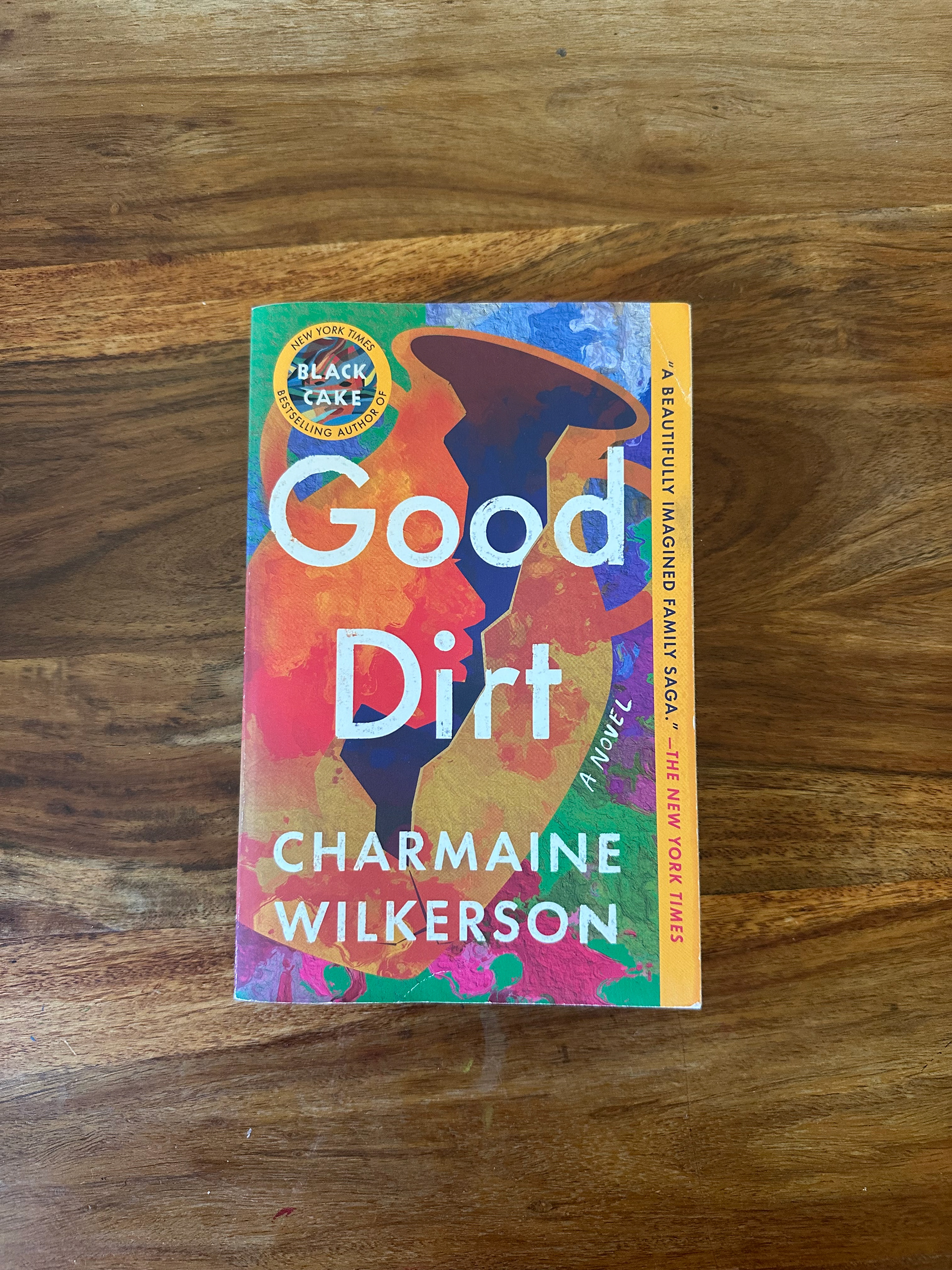
Good Dirt by Charmaine Wilkerson
The opening chapters of this novel are spectacular! There is a short prologue that grips the reader and places you one month before, and that in itself sets the reader on the path of curiosity that Wilkerson is able to sustain well into the novel. Who doesn't love memories caught by camera and who doesn't know of that feeling when you can look back on a moment that perhaps didn't turn out the way you had hoped. That is what we see in the prologue and it is absorbing for all its contextual details and clues.
Then the novel continues and it is quick to read as the chapters are brief and concise moving us between 2000 and 2018 and then to chapters that simply have enigmatic titles like 'Small Favors' and 'Flight' that signify some of the plot to come.
Our attention is held by protagonist Ebby Freeman who is stood up at the altar and that in itself drives the story forwards and embeds us in much more than just a failed romance. The families involved are so interesting. There is a lot of (well-researched as noted in Wilkerson's Author's Note) history involved about Massachusetts, the inclusion of a personal tragedy so terrible as the one that befalls the main family in this story, but also the fascination that surrounds the central symbolic pottery jar that is paramount to his novel. At this point, I'd also like to draw attention to the front cover and the jar that is visible over the profiles too. It is brilliant.
One of the main elements of the plot is a tragic crime that takes place early in the novel, where Ebby's brother Baz is killed and the crime is never solved. The fact that the Freemans "were one of the only Black families in a wealthy enclave of New England" means that "the case has [had] an enduring, voyeuristic pull on the public.
The novel shifts locations so that Ebby is in France and the story unravels to incorporate various secrets from Ebby's past and her family's history linked with the powerful handcrafted piece of pottery and the underlying details of her enslaved ancestors.
"...history can be told only through a chorus of voices. Fictional storytelling can be a part of that chorus."
review by Christina Francis-Gilbert
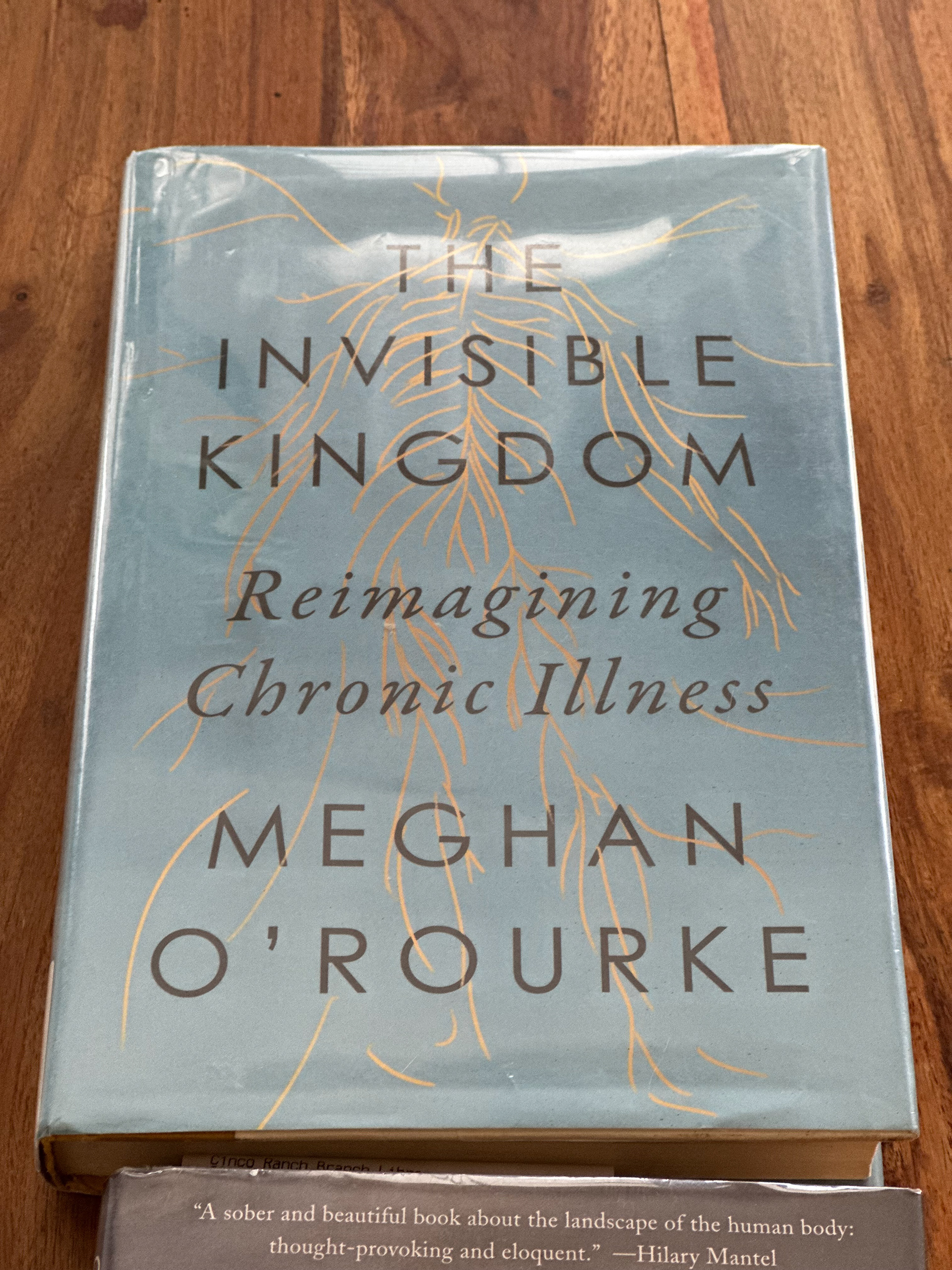
The Invisible Kingdom: Reimagining Chronic Illness by Meghan O'Rourke
Goodreads Review
As with my selection of recent reads about invisible illnesses and chronic conditions, this book was most interesting to me. It draws on medical experiences from Megan 'Rourke about her own personal life of unexplained symptoms and undiagnoses, as well as the dismissals she has received over the years in the American health system. Her references span and encompass autoimmune diseases, post-treatment Lyme disease syndrome, and even long COVID.
I have to admit that the details and discussion were not as relevant to my own area of research as other titles I have recently reviewed, such as A Silent Fire: The Story of Inflammation, Diet and Disease by Shilpa Ravella. Nevertheless, some of the chapters on Obstacles, and exploratory points like "Autoimmunity as Metaphor", "The Wisdom Narrative" and "Positive Thinking" were all very informative and thought-provoking.
It is worth reading Megan O'Rourke's non-fiction in essay form, since I do think this is where her voice is most powerful in all its revelations and explorations of these important topics.
review by Christina Francis-Gilbert
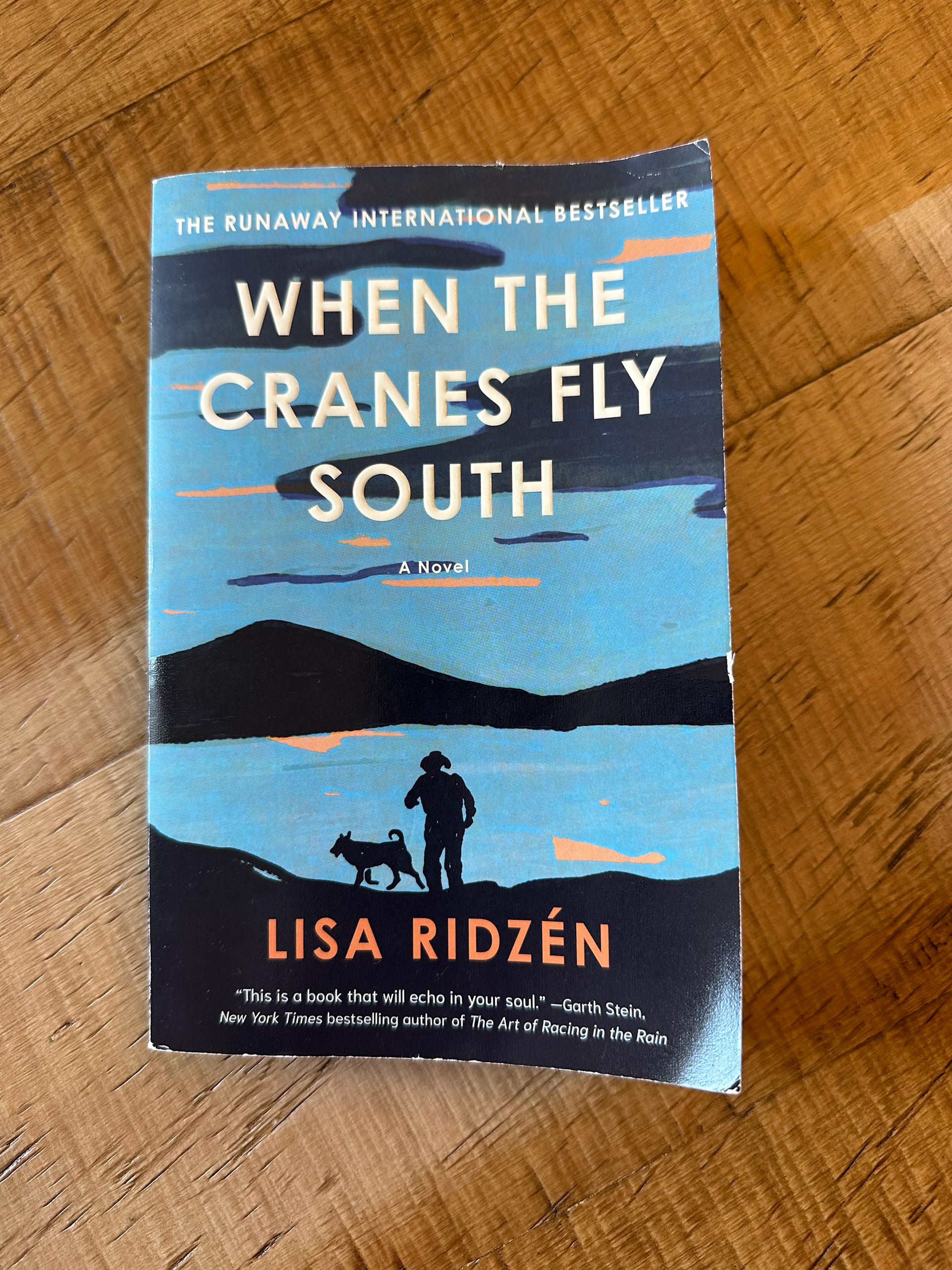
When the Cranes Fly South by Lisa Ridzen, Translated from the Swedish by Alice Menzies
"Bo is running out of time. Yet time is one of the few things he's got left. These days, his quiet existence is broken up only by daily visits from his home care team. Fortunately, he still has his beloved elkhound Sixten to keep him company . . . though now his son, with whom Bo has had a rocky relationship, insists on taking the dog away, claiming that Bo has grown too old to properly care for him. The threat of losing Sixten stirs up a whirlwind of emotion, leading Bo to take stock of his life, his relationships, and the imperfect way he's expressed his love over the years."
This is a novel I loved reading for hearing an older male protagonist's voice. My own writing has the same and it intrigues me as to whether it is apparent that the viewpoint comes from a female, in this case the swedish author Lisa Ridzen. Seeing the patterns of thought and the way she has presented her character Bo and his son Hans, has been of great interest to me. It continually bothers me to think that the genre women's fiction is generally only considered to be such, if the primary point of view is a female voice.
In simple terms, the novel is beautifully about one man and his dog with sad and inevitable consequences. That's it, and it seems so non eventful, but this novel is filled with emotion, moments for meditation and a lot to take to heart about grieving and family relationships. It's a lovely read and its honesty and success in documenting the way dignity ought to be retained for older members of a community, especially those nearing death, is well written.
In between each chapter there are caregiver entries which give an alternative perspective on the first person narrative and interiority of Bo throughout. It works well and I loved finding out that the idea for this novel came from Lisa Ridzen's discovery of notes her grandfather's care team had left the family as he neared the end of his life.
review by Christina Francis-Gilbert