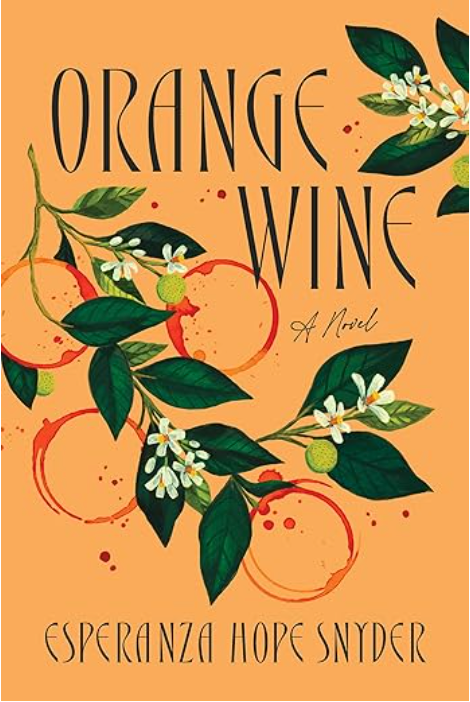
Orange Wine by Esperanza Hope Snyder
A debut novel by Esperanza Hope Snyder, a writer, poet and translator. She was born and raised in Bogota, Colombia and has lived in Italy, the US and Spain.
Knowing of the author's previous published poetry collections makes sense to me as a reader of her first novel, since the slow oozing of this beautifully named story and its gentle narrative is all-at-once lyrical and frustratingly fused with internal and subjective musings on all that the protagonist sees and does. It does make for words that yearn to be translated because of the direct sequence of events, and descriptions. Esperanza Hope Snyder's style makes her writing very visual and full of colour but it is simplistic. It does also read a little like a screenplay with its intense attention to sensory detail. And finally it also clearly has influences from its South American writer's heritage, not comparable to Gabriel Garcia Marquez but with some overlaying connections.
Quick short chapters! The main character is Ines, who starts her story by telling us of her husband's infidelity at the moment she was giving birth to her daughter Lucy. I believe it's meant to be self-reflective and the chapters flit around this opening premise of her vulnerability and problematic marriage. She is very isolated as a character, being a female and now mother and trapped in a cultural stronghold that determines her homemaking existence in which she ought not to question her reality.
As Ines makes a trip away from her hometown of Paipa to Bogota, there is a lot of criticism for her travelling alone with children but without a man.
The second section shifts to Helena, Ines' sister whose life working for a Belgian railroad company is relayed through Ines' perspective. From this point onwards, there are developing romantic relationships, strife and conflict between siblings and travel to and from Italy.
Thank to NetGalley and publisher for the ARC copy. Due to be published September 30.
review by Christina Francis-Gilbert
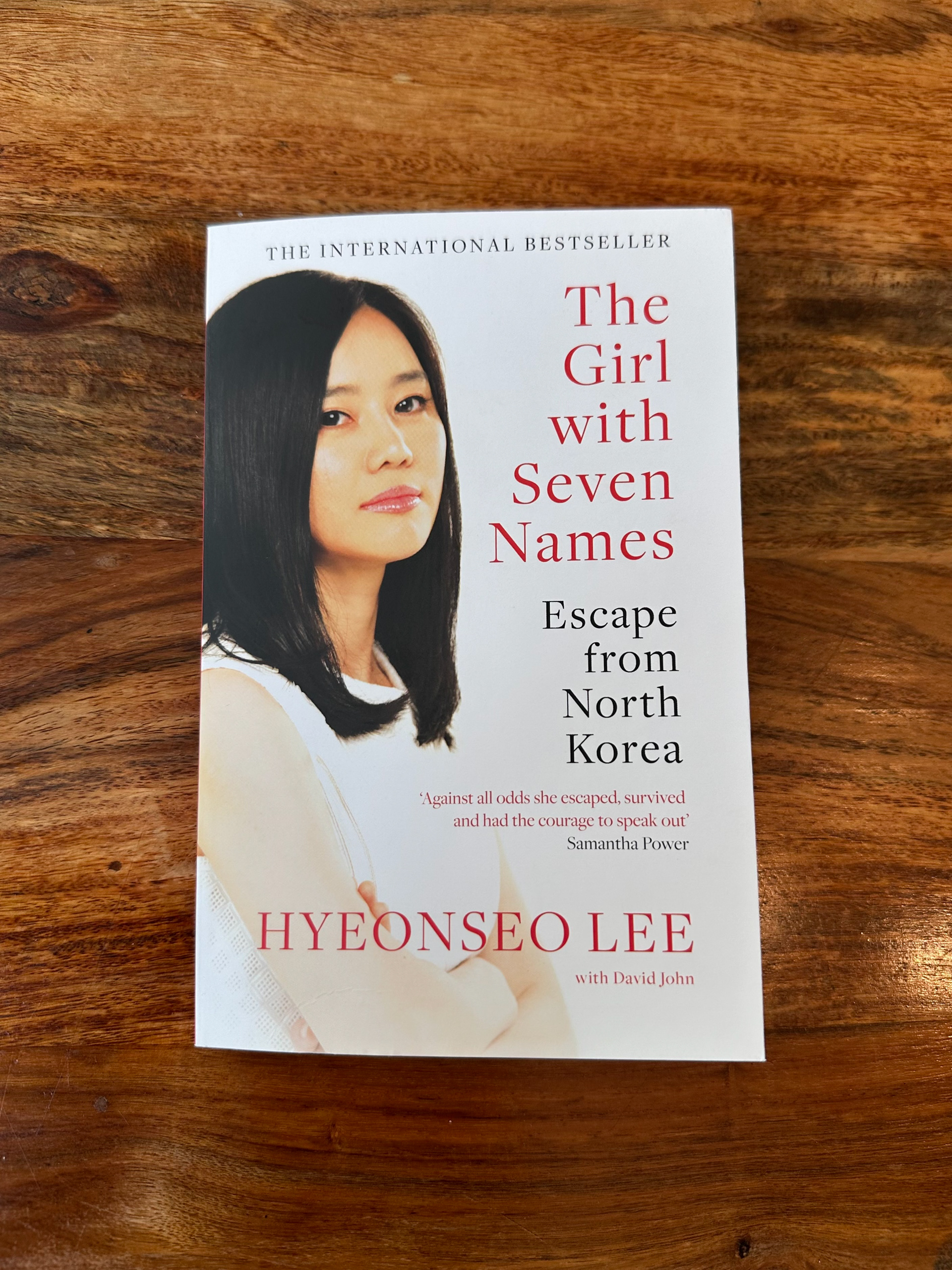
by Hyeonseo Lee with David John
Goodreads Review
The harrowing barriers and relentless challenges Hyeonseo Lee faces and relays to us in this brave memoir are so very interesting and worth learning about. I enjoyed the story-like nature of the narrative with each chapter ending on a definite intriguing cliffhanger as to what on earth she needs to do next in order to preserve her sense of self, her identity, her relationships with brother, mother, family and friends but also simply to survive as a defector of the North Korean regime of the 1990s. Truly shocking in places.
The title speaks to her shifting identity and the names she had to accept throughout her escape from Hyesan in North Korea, out to Shenyang and Shanghai in China, and later with her family through Vientiane in Laos towards South Korea.
The journey into Lee's interior thoughts about herself and her coming-of-age, first leaving North Korea as a teenager, her innocent observations of China and its wildly different way of living, the honest telling about corruption, ID and border issues, the power of money and the kindness of others makes this book an eye-opening essential read.
What is most interesting though, is the pull Lee continues to feel towards her home country of North Korea, her family and its origins and culture in spite of what she realises is such a backward regime rife with propaganda, once she does move away.
It makes the novel one that is more about resilience and inspiration. Knowing that Hyeonseo Lee was the first North Korean to give a TED speech in 2013 and that she now campaigns internationally for North Korean human rights and refugee issues, speaks all over the world at the UN makes this memoir even more important and hopeful.
Really worth reading. Highly recommended.
review by Christina Francis-Gilbert
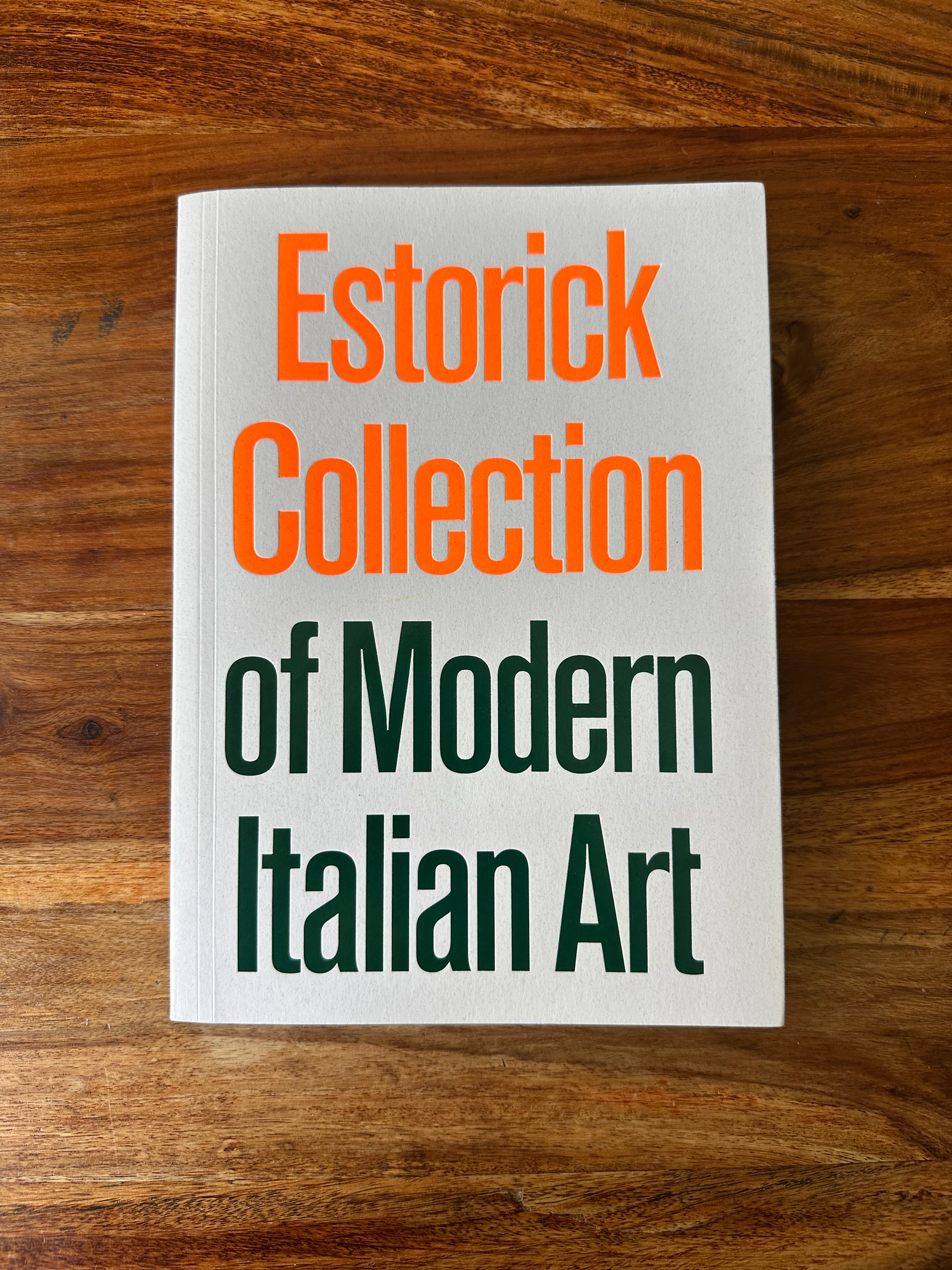
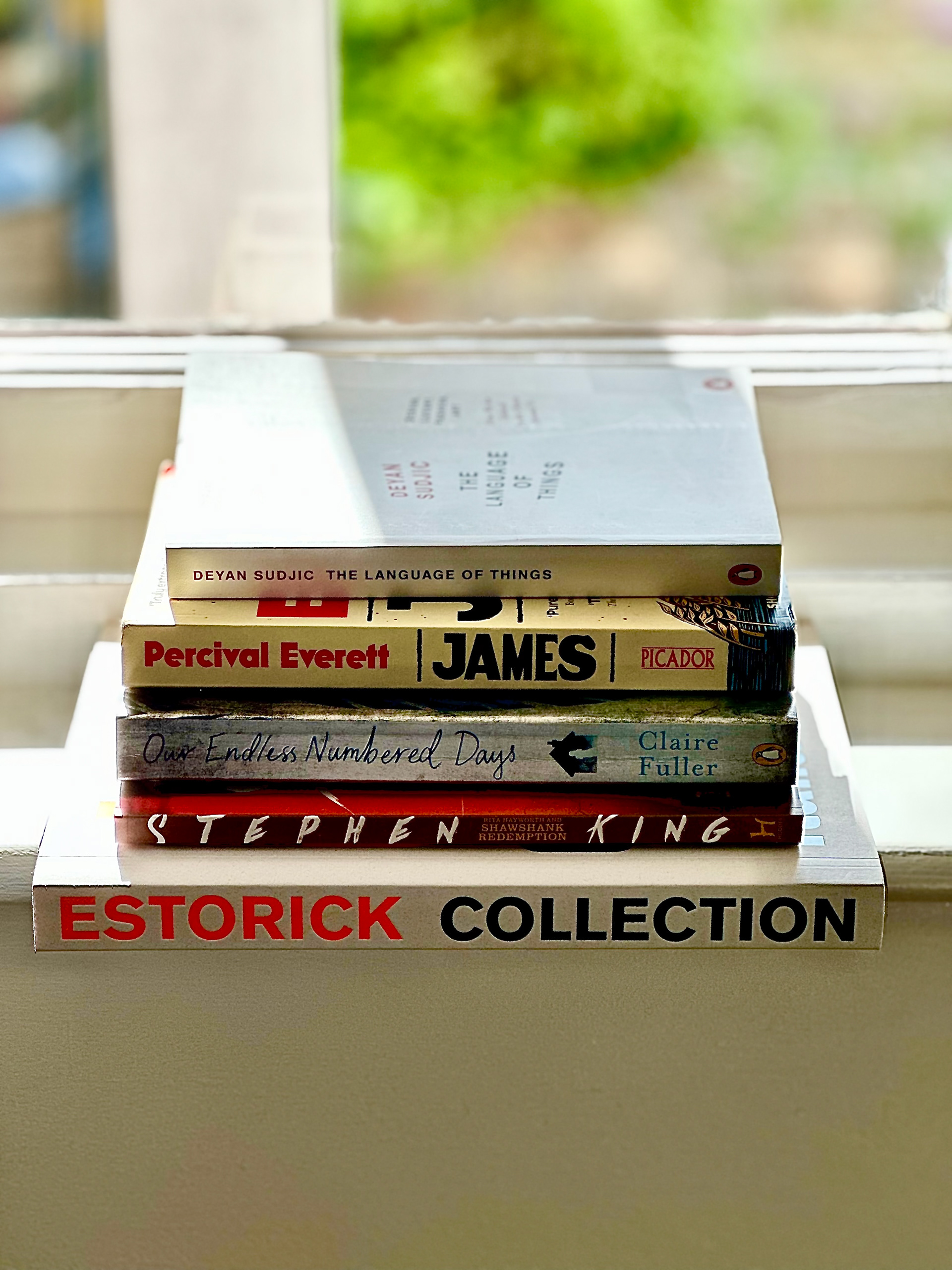
Estorick Collection of Modern Italian Art
Artists in the collection:
Giacomo Balla, Umberto Boccioni, Massimo Campigli, Carlo Carra, Giorgio de Chirico, Gerardo Dottori, Corrado Govoni, Emilio Greco, Renato Guttuso, Giacomo Manzu, Marino Marini, Amedeo Modigliani, Giorgio Morandi, Zoran Music, Ottone Rosai, Medardo Rosso, Luigi Russolo, Giuditta Scalini, Gino Severini, Mario Sironi and Ardengo Soffici
With an introduction by Michael Estorick, information about the museum by Director Roberta Cremoncini and chapters displaying Futurism, Metaphysical Art, Lines of Poetry, Special Connections, Sculpture and Exhibitions 1998-2024, this book is an excellent accompaniment to a visit to the wonderful Northampton Lodge that houses the Estorick Collection of Modern Italian Art.
Learning about how the collection was started, curated, developed, and maintained is most interesting, particularly in relation to political influences from Italy and elsewhere. It is the only institution of its kind in the UK, focusing on Italian modernism and claims with its temporary exhibitions over the years to "have addressed the full spectrum of artistic expression in Italian art of the twentieth century, presenting works in a wide range of media, from painting, to sculpture, graphic design, printmaking, photography, textiles and ceramics."
review by Christina Francis-Gilbert
Catalogue entries edited by Christopher Adams
Catalogue Design by Studio Bergini
Photographs of the museum by Studio Bergini and Claudia Zanardi
"With thanks to the Board of Trustees of the Estorick Foundation, to all members of staff, past and present, and to those who have volunteered at the museum over the years...
The Estorick Collection gratefully acknowledges the contribution of the following individuals to this publication: Ezio Buzzegoli, Paul Coldwell, Alice Ensabella, Diane Kunzelman, Claudia Marchese, Richard Nathanson, Mattia Patti, Davide Spagnoletto."
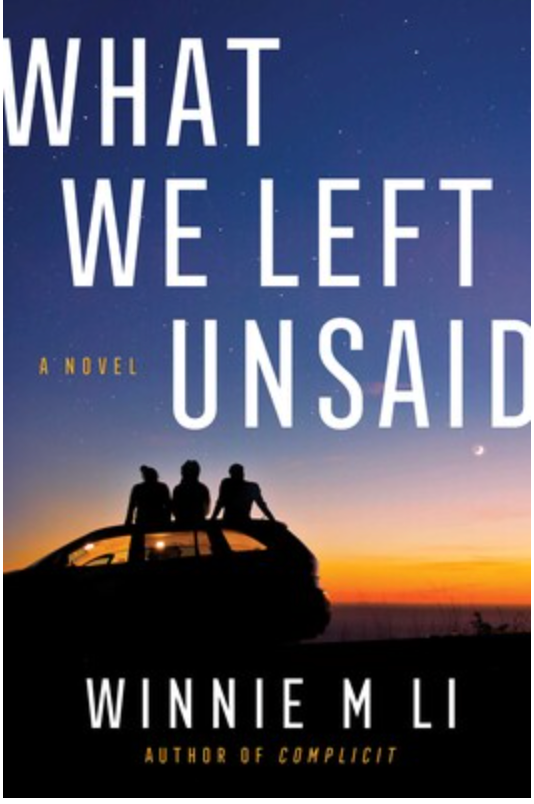
What We Left Unsaid by Winnie M Li
Winnie M Li's What We Left Unsaid drew me in with its premise of estranged siblings called upon to travel across America via the Grand Canyon to see their mother who has suffered from a stroke on the West Coast. Although I don't think the prologue, which opens in 1991 in Arizona, is needed, it does introduce the central point from the past of the main characters Bonnie, Alex and Kevin Chu that brings them together in the present storyline. Still, I would have been fine starting Li's novel with Bonnie's point of view in the present day when she hears from her father of her mother's illness.
The opening chapters read smoothly, with enough interesting details about each of the three siblings' separate lives to grip my attention. The siblings are first shown to the reader in their separate settings where they have moved to live with their respective 'new' families; Bonnie in Boston, New England, Kevin in Chicago and Alex in London. Their estranged relationships with their distanced parents, who are Taiwanese immigrants in California, and with each other is emphasised. Li writes her characters with prominent "Asian American" perspectives of these experiences but for me, it doesn't seem that dissimilar to a life where children move to live away from their parents, sometimes abroad, and so it might be considered an appealing universal element of the novel. Nevertheless, also worth noting the character of Kevin in particular who constantly comments on, or perhaps is a little hung up on his background and there are points in the narrative where his opinion or his voice grates a little: "Her name tag says Asia, which Kevin finds ironic, since she is Black." I wonder if a sensitivity reader might pick up on this as needing revision?
I loved the references to the Route 66 drive across America and having done some of this highway drive towards the Grand Canyon ourselves, it was great to read scene descriptions bringing it alive, Of course the gas station stop mentioned in the prologue is referenced later in the plot too, though since it was already given in the prologue, the "startling family secret" was sadly too obvious.
An enjoyable, low-stakes read with some interesting characters and ultimately a pleasing family reunion of not just siblings but adult children and their parents too.
Thanks to NetGalley and Winnie M Li for the advanced copy.
The opening chapters read smoothly, with enough interesting details about each of the three siblings' separate lives to grip my attention. The siblings are first shown to the reader in their separate settings where they have moved to live with their respective 'new' families; Bonnie in Boston, New England, Kevin in Chicago and Alex in London. Their estranged relationships with their distanced parents, who are Taiwanese immigrants in California, and with each other is emphasised. Li writes her characters with prominent "Asian American" perspectives of these experiences but for me, it doesn't seem that dissimilar to a life where children move to live away from their parents, sometimes abroad, and so it might be considered an appealing universal element of the novel. Nevertheless, also worth noting the character of Kevin in particular who constantly comments on, or perhaps is a little hung up on his background and there are points in the narrative where his opinion or his voice grates a little: "Her name tag says Asia, which Kevin finds ironic, since she is Black." I wonder if a sensitivity reader might pick up on this as needing revision?
I loved the references to the Route 66 drive across America and having done some of this highway drive towards the Grand Canyon ourselves, it was great to read scene descriptions bringing it alive, Of course the gas station stop mentioned in the prologue is referenced later in the plot too, though since it was already given in the prologue, the "startling family secret" was sadly too obvious.
An enjoyable, low-stakes read with some interesting characters and ultimately a pleasing family reunion of not just siblings but adult children and their parents too.
Thanks to NetGalley and Winnie M Li for the advanced copy.
review by Christina Francis-Gilbert
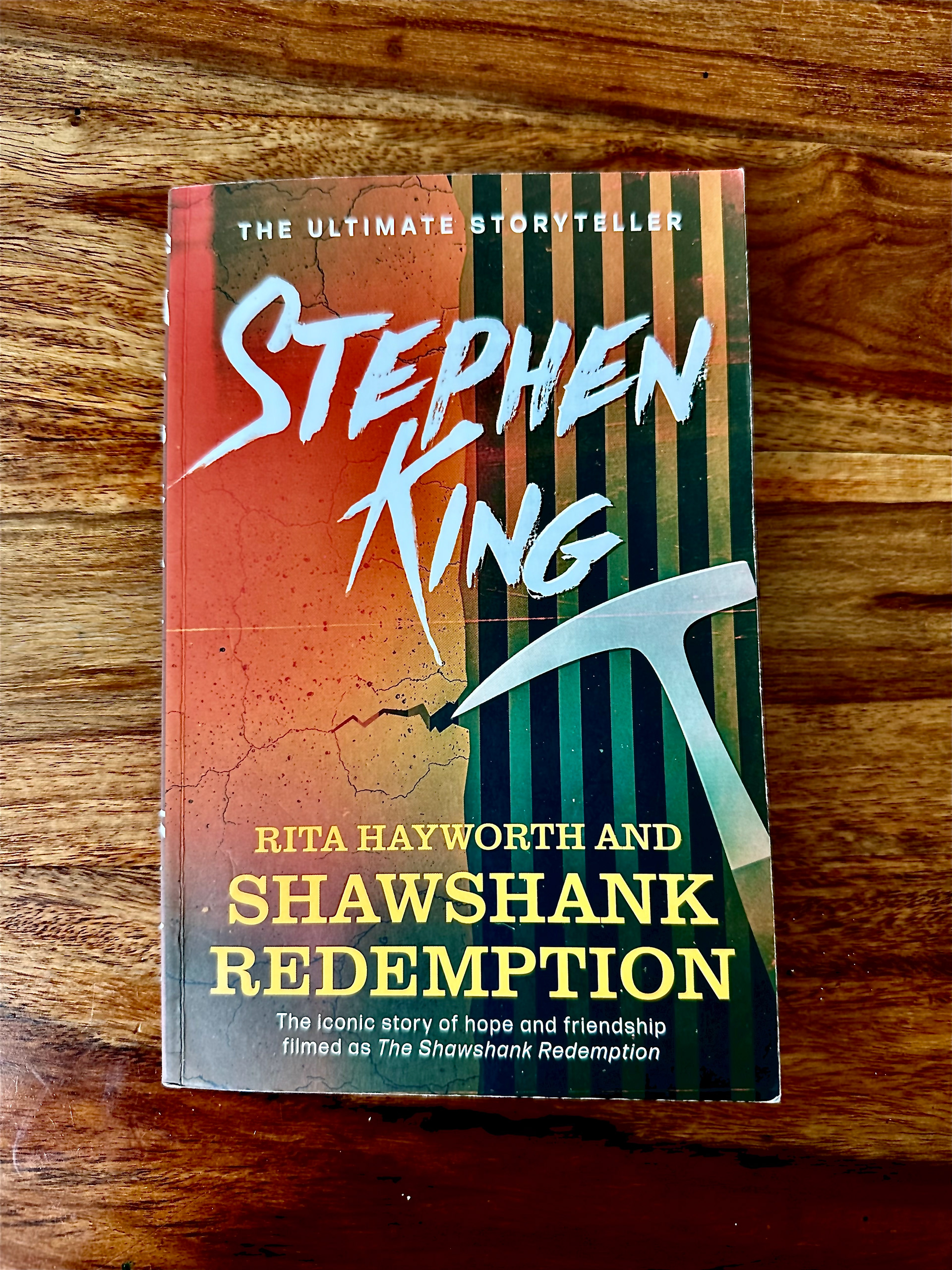
Rita Hayworth and Shawshank Redemption by Stephen King
The iconic story of hope and friendship filmed as The Shawshank Redemption.
I haven't read anything by Stephen King in a long time, so this choice of novella was a spectacular reminder of how brilliant this novelist is! The voice of Red, who narrates his prison existence along with fellow inmate Andy Dufresne, is distinctly brilliant with his telling of what happens in the Shawshank State Penitentiary Prison.
With a gripping setting that gives readers an insight to the insides of a prison and its criminally convicted inmates is thrilling and often disturbing. Yet, the tale is one of friendship, understanding and hope that is bandied around in the institutionalised setting between Red and Andy for years.
Being a novella of only 130 pages, It's a short, quick read but each page of narration and humane observation on Red's part, pushes the reader onwards to find out all the stories and all that Red knows, gradually learns and surmises about his companion. It's really a page-turner!
Great indirect social commentary and opinion of related topics such as rehabilitation, the impacts of incarceration on a person's identity and mind, the American legal system, institutions, hope in the world and resilience with one's lot in life.
review by Christina Francis-Gilbert
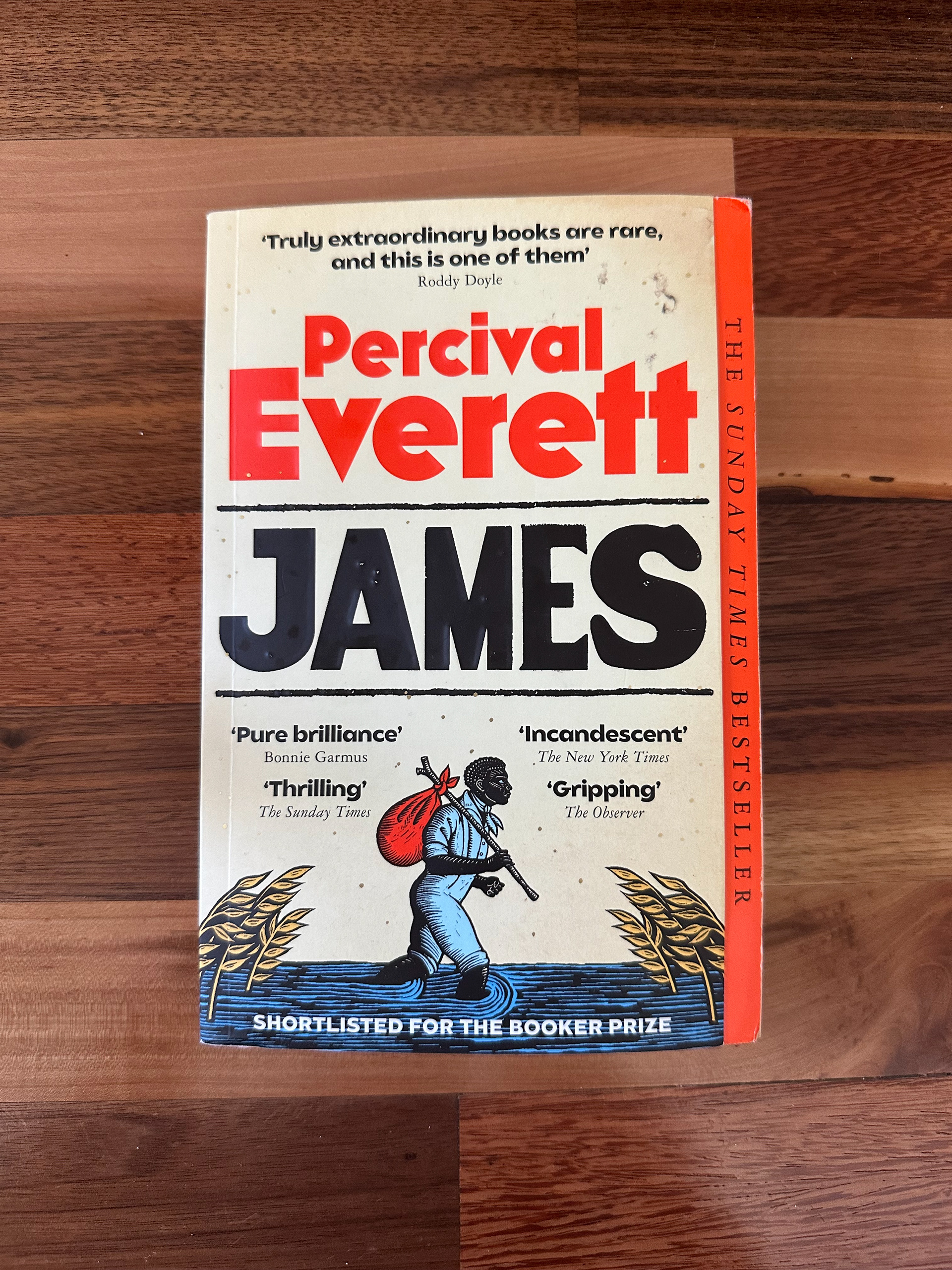
James by Percival Everett
This book. Exceptional. Wow. A phenomenal retelling of Huckleberry Finn by Mark Twain that gives readers the voice and emotive experience of Jim, the enslaved father and husband who runs away when faced with being sold alone without his wife and daughter to a man in New Orleans. He meets up with young Huck, escaping from his father's abuse.
Incredible expansion on the dangerous Mississippi River setting of 1861 and the journey by raft to escape Jim's experiences of enslavement towards some sort of freedom in the free States.
Ann Patchett has said "Who should read this book? Every single person in the country," which is so true, as should all readers across the world.
The perspective of James is brilliant, satirical, humorous, heartbreakingly honest about disgusting behaviour (both observational and in response to his own treatment) but historically accurate (uncomfortably so) in the way Percival Everett never lets James step out from the character and resigned inferiority he needed to be to keep him safe.
Dialogue is excellent. Fantastic representation of characters through their words and Everett's twist to explain James' concealed intelligence and linguistic excellence struck me as a dazzling reimagining of the original tale.
A masterpiece. Easy to read but emotionally hard to absorb. Fantastic novel of great importance that I'm sure will become a future classic.
review by Christina Francis-Gilbert
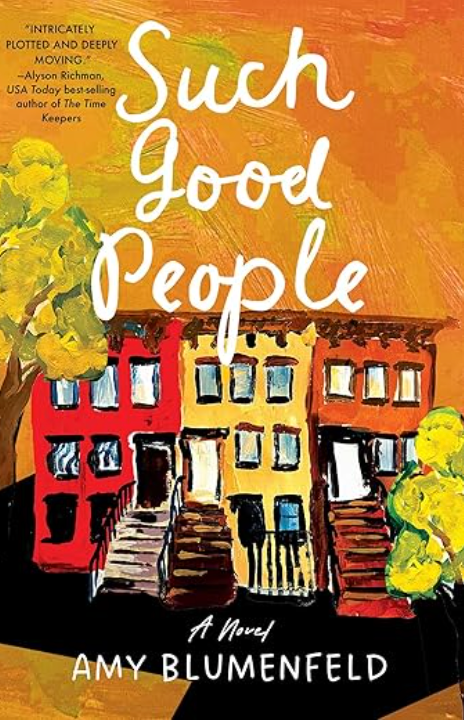
Such Good People by Amy Blumenfeld
Gripping couple of opening chapters and Amy Blumenfeld drives readers to directly connect with the protagonist April as she celebrates the success of her political husband Peter on an evening out in Chicago's beautiful metropolis. We are drawn to suspect a past life very different from the glitzy expensive "swanky" restaurant scene that April shares with her husband. When a phone call from a New York Times reporter interrupts them before they have even ordered, questioning her about the prison release of an old friend of hers, she is thrown back to guilty memories of a different life.
Then, the narrative shifts to that of Rudy, the friend who is about to be released and later the POVs of Jillian, a journalist and finally Peter. The interwoven perspectives work well to offer an all-rounded insight to the various thoughts that we can have in various circumstances.
The strength of relationship shown in the friendship between Rudy and April seems original and new since so many novels are all about unrequited or romantic love. Love in this novel is really beautiful.
Amy Blumenfeld's writing style is direct and straightforward so this novel is easy to flow through. A great summertime read since though there is a lot of detail and description and telling of the story, the tale is full and propulsive so that readers stay engaged with waiting to learn what each character's next reaction of action will be in the sequence of events.
This is a highly readable book with a lovely ending!
Thank you to NetGalley and publishers Spark Press for an advanced glimpse at this novel. Recommended for pre-order. Due to be published July 8th.
review by Christina Francis-Gilbert
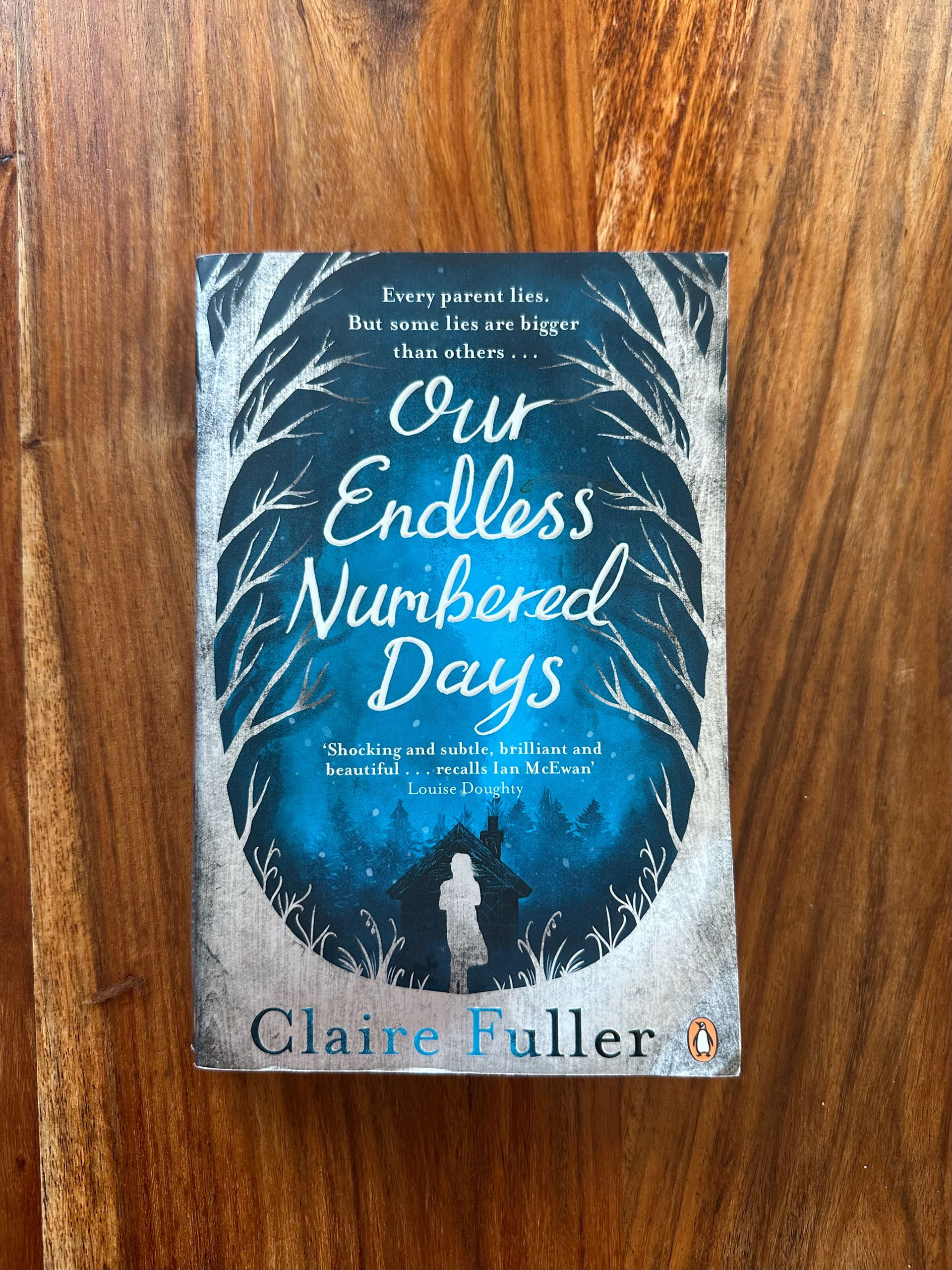
Our Endless Numbered Days by Claire Fuller
Goodreads Review
The opening lines of this novel help to give some explanation for the multiple layers of interpretation likely to evolve from this poor young protagonist's 1st person narrative.
"This morning I found a black and white photograph of my father at the back of the bureau drawer. He didn't look like a liar. My mother Ute ..."
Young Peggy, whose full name we only learn at the end of the novel is also referred to as 'Punzel along with all the indirect references to a trapped female, isolated from the world. She tells her story, her memories, her perceptions of what happens around her in her London home with German mother Ute and influential father James with his Retreater or 'Survivalist' friendship group. She tells the reader what she sees. what she understands of the natural world around her and of conversations, ultimately of what the world in which she finds herself needing to survive comprises. In that sense, the long, sometimes drawn out chapters of her interiority and attempts to work out how to live alone with her father in die Hutte, a cabin in a forest that he takes her to, telling her the rest of the world and civilisation, including her mother have died.
Horribly, the reader will soon realise what has really happened and that the eight year old has been kidnapped and cut off from everything, innocent and naive to her situation, which makes it all the more sad and haunting. Claire Fuller is so clever with the subtlety of her writing and I appreciated her not giving specifics or graphic details of what is surely taking place. Nevertheless, I know that some reviewers have not liked what is implied, so this ought to be labelled as a trigger warning.
Coming back to the layers of this novel, there are clues towards what the older 'Punzel will need to understand and move on from as she escapes back to the real world. The cliffhanger moments at the end of each chapter are powerful, such as the simple observation of her passport burning, the redness of her father's face or the waving goodbye of a friendly face. There are fairytale references throughout which make the reading of this novel a chilling but bewitching experience.
This is Claire Fuller's debut novel, first published back in 2015. I've read her latest The Memory of Animals, and am going to move on to read Unsettled Ground, Swimming Lessons and Bitter Orange. I dare you to do the same!
"As warped and sinister as any Brothers Grimm fairytale." [Metro]
review by Christina Francis-Gilbert
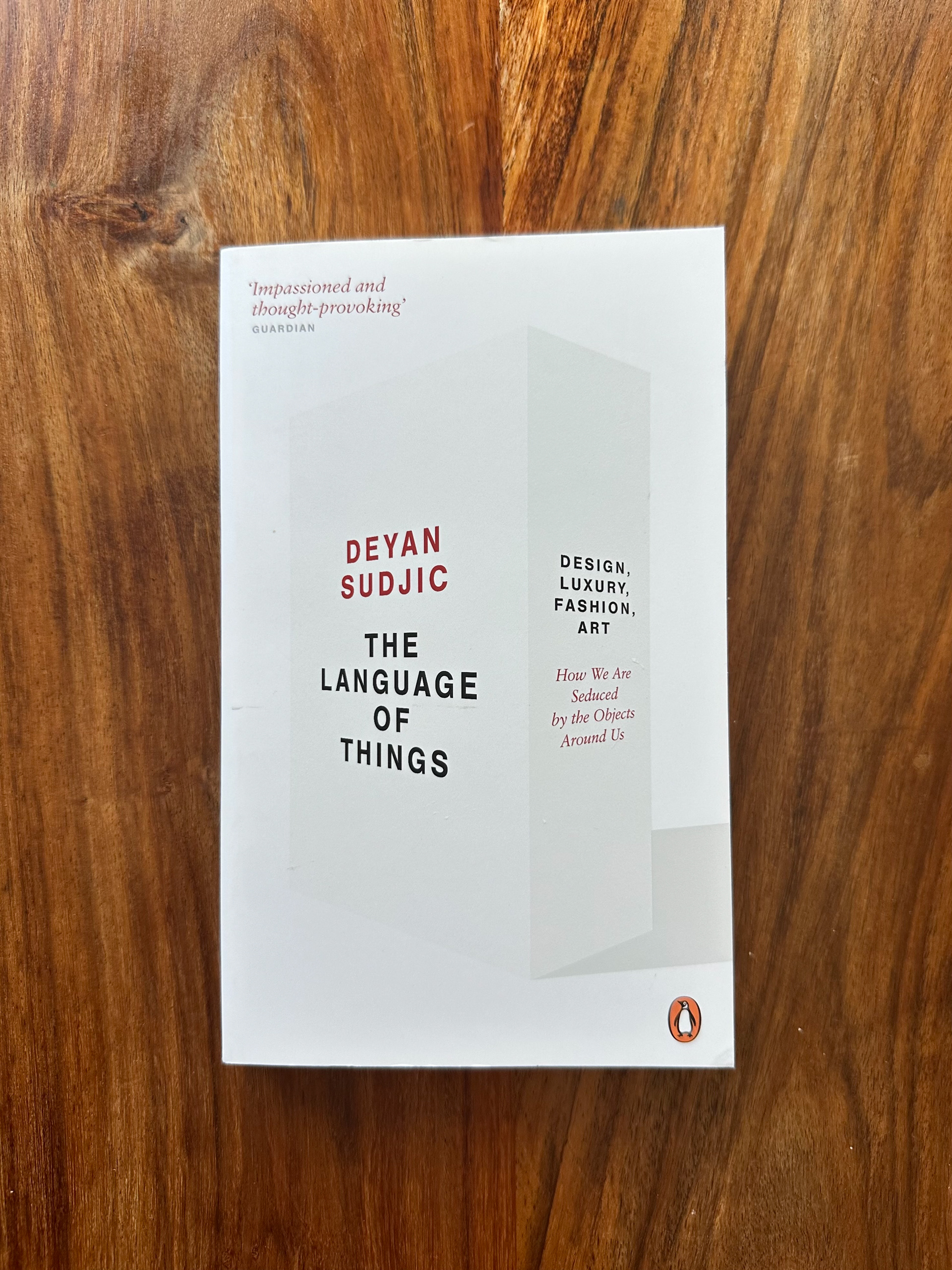
The Language of Things by Deyan Sudjic
This quick and interesting short non-fiction book is about how we are seduced by the objects around us. Its subtitle introduces Design, Luxury, Fashion and Art which are each uncovered in sections with images and thought-provoking discussion.
First published in 2008, it does read a little outdated from what is continually developing now in terms of our connection with "things". In his introduction, Deyan Sudjic, former architecture critic for the Observer and a visiting professor at the Royal College of Art, speaks of "A World Drowning in Objects" and draws readers' attention to the thought that "our relationship with our possessions is never straightforward ... a complex blend of the knowing and the innocent."
The chapter on Fashion is most interesting from an historical viewpoint too, since it presents the journeys of fashion shows and all the objects that surround how those are run, as well as references to political movements that have influenced fashion, in particular in Italy like Armani. Not to mention the theatre fashion from Giorgio Armani, Hubert de Givenchy, Hardy Amies, Yves Saint Laurent and Ralph Lauren who saw how cinema had much promotional appeal.
I loved the chapters on Art which also referenced architecture, engineering, ideas and objects, drawing the discussion towards Design and Art which "serve sometimes to reinforce each other." Some fascinating explorations of what has happened in the industries that encompass art and design.
Ultimately, some of the final words are still true, in that: "we live in a time when our relationship with our possessions is undergoing a radical transformation" and that these days we are being "...offered an entirely different category of object."
review by Christina Francis-Gilbert